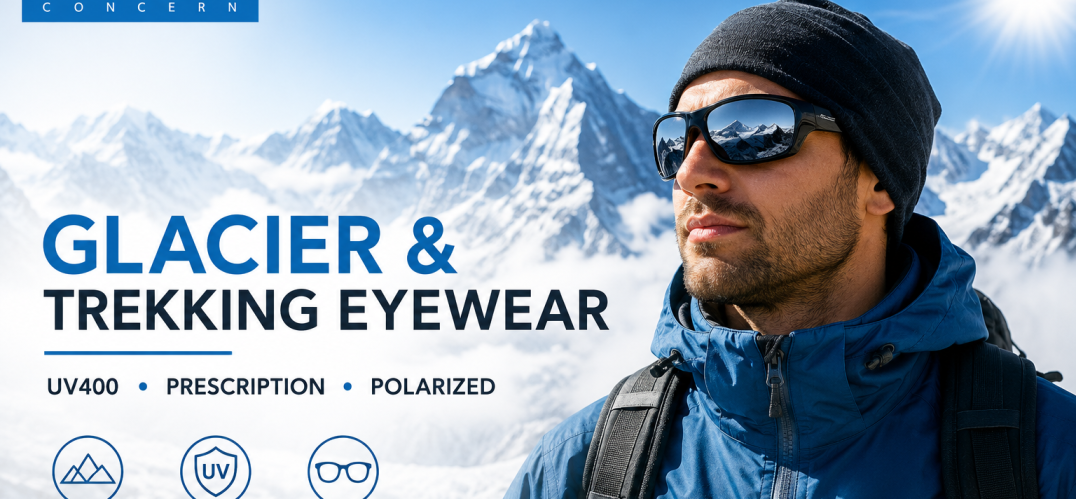
Whether you're trekking to Everest Base Camp, climbing Island Peak, exploring Annapurna, crossing high mountain passes, or photographing Nepal's spectacular glaciers, protecting your eyes is essential. At Vision Concern Eye Clinic, we provide premium Glacier & Trekking Eyewear in Nepal, including prescription glacier sunglasses, alpine eyewear, UV400 protection, polarized lenses, and high-altitude optical solutions for trekkers, climbers, guides, and adventure travellers.
Our experienced optometrists help you choose the ideal eyewear for your prescription, destination, altitude, and outdoor activities using premium lens technologies from ZEISS, HOYA, and TOKAI.
At high altitude, ultraviolet radiation increases significantly. Snow and glaciers reflect up to 80% of UV light, exposing your eyes from both above and below. Without proper protection, prolonged exposure can lead to photokeratitis (snow blindness), severe glare, eye fatigue, dry eyes, and long-term damage to the cornea and retina.
If you wear prescription glasses, you don't have to compromise your vision during your adventure. We provide custom prescription glacier sunglasses using premium ZEISS, HOYA, and TOKAI lenses with polarized, photochromic, and high-index options.
Not all sunglasses are suitable for high-altitude trekking or mountaineering. Glacier eyewear is available in different protection categories depending on the amount of visible light transmitted through the lenses.
| Category | Light Transmission | Recommended Use |
|---|---|---|
| Category 3 | 8–18% | Trekking, hiking, everyday mountain travel and general outdoor activities. |
| Category 4 | 3–8% | High-altitude mountaineering, glaciers, snowfields and extreme expeditions. |
Our optometrists will help you choose the appropriate lens category based on your destination, altitude, and planned activities.
Snow blindness (photokeratitis) occurs when intense ultraviolet rays reflect from snow and ice, causing temporary damage to the surface of the eye. Symptoms may include severe eye pain, excessive tearing, redness, light sensitivity, blurred vision, and the sensation of sand in the eyes. Wearing certified UV400 glacier eyewear significantly reduces this risk.
For every 1,000 metres of altitude gained, UV exposure increases significantly. Popular trekking destinations such as Everest Base Camp, Gokyo Lakes, Thorong La Pass, Annapurna Base Camp, and Island Peak expose trekkers to much stronger UV radiation than at sea level. Combined with sunlight reflected from snow and rock, this creates challenging conditions for your eyes.
Many international visitors arrive in Kathmandu before beginning expeditions to Everest, Annapurna, Langtang, Manaslu, Kanchenjunga, and Mustang. Vision Concern Eye Clinic provides professional eye examinations, prescription glacier sunglasses, emergency replacement spectacles, premium contact lenses, and customised outdoor eyewear before your journey begins.
Choosing glacier eyewear involves more than buying dark sunglasses. Our experienced optometrists assess your prescription, trekking route, altitude, expected weather, and frame fit to recommend eyewear that delivers exceptional protection, comfort, and optical performance throughout your Himalayan adventure.
Glacier glasses are specialized sunglasses designed for intense sunlight, high-altitude UV exposure, snow, ice, and reflective mountain environments. They typically provide strong UV protection, dark lenses, secure fitting, and side protection to reduce light entering from different directions.
Glacier glasses are especially important for high-altitude trekking, snow-covered routes, glacier crossings, and mountaineering expeditions. For lower-altitude trekking, high-quality Category 3 sunglasses may be suitable, while Category 4 lenses are generally intended for very bright alpine and glacier environments.
Trekking sunglasses are suitable for general hiking and mountain travel, while glacier glasses offer stronger protection for snow, glaciers, and extreme sunlight. Glacier eyewear may also include darker lenses, wraparound coverage, side shields, and a more secure fit.
Yes. Vision Concern Eye Clinic provides prescription glacier sunglasses for trekkers and climbers who need vision correction. Depending on your prescription and frame, options may include polarized, high-index, tinted, and photochromic lenses.
No. Category 4 lenses are extremely dark and are not suitable for driving. They are designed for intense high-altitude, glacier, and snow conditions. For driving, choose lenses specifically designed for road use.
Polarized lenses can reduce glare from water, wet roads, snow, and reflective surfaces, making them useful for many trekking conditions. However, the best lens depends on your route, altitude, weather, and whether you need to read digital devices or instruments clearly.
Photochromic lenses can be convenient because they adapt to changing light conditions. They may work well for variable weather and everyday trekking, but very bright snow and glacier conditions may require darker dedicated sunglasses.
Grey lenses provide natural colour perception, while brown and copper lenses can improve contrast and depth perception on trails. The most suitable tint depends on the terrain, weather, altitude, and personal comfort.
Glacier glasses help reduce exposure to intense ultraviolet radiation reflected from snow and ice. Proper UV400 protection, sufficient lens darkness, side coverage, and secure fitting are important for reducing the risk of photokeratitis, commonly called snow blindness.
Yes. An eye examination is recommended if you wear prescription glasses or contact lenses, experience headaches or blurred vision, or are preparing for a long expedition. It also gives you time to arrange backup glasses, prescription sunglasses, and suitable contact lenses before departure.
Yes. Vision Concern Eye Clinic assists tourists, trekkers, and expats with prescription eyewear, contact lenses, emergency replacement spectacles, and outdoor lens consultation in Kathmandu, depending on lens availability and prescription requirements.
Vision Concern offers premium lens solutions from ZEISS, HOYA, and TOKAI. The most suitable brand and lens design will depend on your prescription, chosen frame, trekking route, and visual needs.
Do not wait until you reach the mountains to discover that your sunglasses are too weak, your prescription is outdated, or your frame is uncomfortable. Visit Vision Concern Eye Clinic before your trek for a professional eye examination and personalised glacier eyewear consultation.
Our team can help you choose suitable eyewear for trekking, climbing, snow travel, photography, and high-altitude expeditions. We also provide prescription sunglasses, contact lenses, backup spectacles, high-index lenses, and UV-protective eyewear for international visitors and local adventurers.
📍 Lazimpat | Boudha | Makalbari
☎ 01-4562303
📱 9841466716
🌐 www.visionconcern.com
Preparing for the Himalayas? Whether you're trekking to Everest Base Camp, exploring the Annapurna Circuit, hiking in Langtang, or climbing Nepal's spectacular peaks, choose an eye clinic trusted by international travellers. Read authentic Tripadvisor reviews from trekkers, mountaineers, expats, and local patients who trusted Vision Concern Eye Clinic for premium eye care and prescription outdoor eyewear.
✅ Nepal's ISO Certified Eye Clinic
✅ Member of the International Opticians Association (IOA), United Kingdom
✅ Best Patient Service Award – Ireland
✅ Premium ZEISS, HOYA & TOKAI Prescription Lens Solutions
✅ Prescription Glacier & Trekking Eyewear
✅ UV400, Polarized & High-Index Lens Options
✅ Trusted by Trekkers, Climbers, Tourists, Expats & Embassy Professionals
Prescription Polarized Sunglasses | Photochromic Lenses | High Index Lenses | UV Protection Glasses | Driving Glasses | Comprehensive Eye Examination
Book Your Eye Examination Before Your Trek
📍 Lazimpat | Boudha | Makalbari
☎ 01-4562303 | 📱 9841466716
🌐 www.visionconcern.com
Looking for