

Why Professionals Are Switching to Zeiss 1.74 & Tokai 1.76 Ultra-Thin Lenses in Kathmandu
- The Ultimate Upgrade: Zeiss and Tokai High-Index Lenses
- Why Professionals in Boudha & Kathmandu Choose Premium Lenses:
- Shop Relevant Products
- TOKAI 1.76 Ultra-High-Index Options
- Premium lens guides and professional fitting
- Frequently Asked Questions
- Who benefits most from 1.74 or 1.76 high-index lenses?
- What's the difference between the 1.74 and 1.76 options?
- Do these lenses come with blue light protection?
- Which branches carry these lenses?
- Get a complete glasses quote before you choose
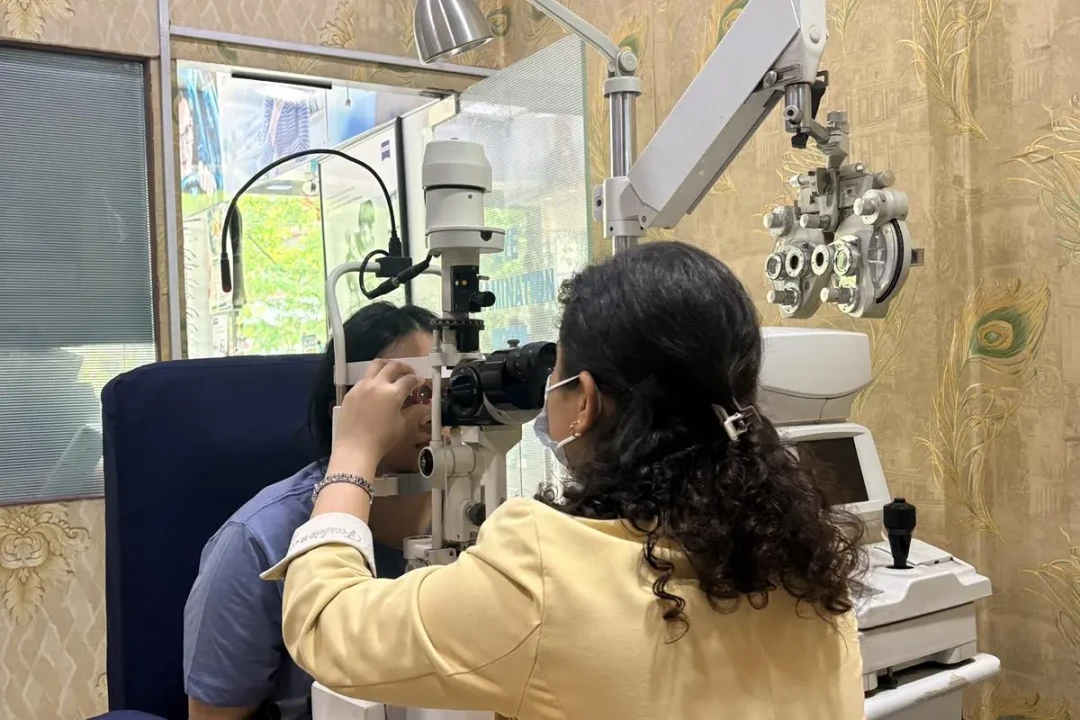
In Kathmandu and worried about your eyes?
Book an eye exam (NPR 400 ≈ US$3) with our English-speaking optometrists in Lazimpat, Boudha or Makalbari — exams by appointment; optical shops open daily 8 AM – 8:30 PM. Card & cash accepted.
If you have a high prescription, standard lenses often end up thick, heavy, and distorted at the edges. For professionals, digital nomads, and high-net-worth individuals in Kathmandu who spend long hours on screens, choosing the right optical technology isn't just about clear sight—it's about comfort, aesthetics, and eye health.
The Ultimate Upgrade: Zeiss and Tokai High-Index Lenses
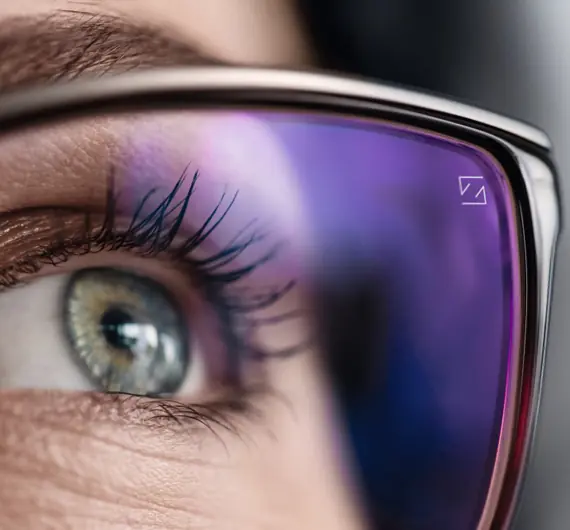
At Vision Concern, we specialize in world-class optical engineering. If you are looking for the best Optician in kathmandu or premium solutions, our branches feature ultra-thin 1.74 index lenses in Zeiss and 1.76 index lenses in Tokai.
Whether you need a reliable progressive glass in kathmandu, precision-fit torric lens in kathmandu for astigmatism, or specialized blue cut glass in kathmandu to eliminate digital eye strain, high-index materials reduce lens thickness drastically while providing crystal-clear optics.
- Unmatched Thinness & Elegance: High-index 1.74 and 1.76 lenses eliminate the "bottle-glass" look, keeping designer frames light and stylish.
- Advanced Anti-Fatigue Protection: Specialized coatings block harmful blue light and reduce focusing fatigue from laptops, phones, and LED lighting.
- Precision Customization: Available for patients seeking elite optical care near Boudha or central Kathmandu looking for contact lens in kathmandu, colour contact lens in kathmandu, or custom progressive designs.
Ready to upgrade your vision? Experience the difference of German and Japanese optical technology. Message us directly via WhatsApp (+9779841466716)
Replies within minutes or visit our ISO-certified branches in Lazimpat and Boudha today.
Shop Relevant Products
Ready to compare suitable options? View the related Vision Concern products below. Prescription and contact-lens suitability should be confirmed professionally.
TOKAI 1.76 Ultra-High-Index Options
Compare these catalogue-listed TOKAI options and request professional prescription review and fitting at Vision Concern.
- TOKAI LUTINA Single Vision 1.76 SPS
- TOKAI Aspheric Single Vision 1.76 SPS
- TOKAI Aspheric Single Vision 1.76 USC + Blue Coating
Ask about lens suitability on WhatsApp
Replies within minutes
- Optical lens prices in Nepal
- Best progressive lenses in Nepal
- ZEISS lenses in Kathmandu
- 1.67, 1.74 and TOKAI 1.76 high-index lenses
- Progressive versus bifocal lenses
For prescription checks, frame selection and accurate measurements, visit our Kathmandu optical service.
Frequently Asked Questions
Who benefits most from 1.74 or 1.76 high-index lenses?
People with high prescriptions who'd otherwise end up with thick, heavy lenses — the thinner materials keep frames lighter and more comfortable.
What's the difference between the 1.74 and 1.76 options?
1.74 is available in ZEISS and 1.76 in TOKAI — both are ultra-high-index materials, with TOKAI 1.76 being the thinner of the two.
Do these lenses come with blue light protection?
Yes, coatings are available that block blue light and reduce focusing fatigue from screens.
Which branches carry these lenses?
Vision Concern's Lazimpat and Boudha branches — message WhatsApp to confirm stock for your prescription.
In Kathmandu and worried about your eyes?
Book an eye exam (NPR 400 ≈ US$3) with our English-speaking optometrists in Lazimpat, Boudha or Makalbari — exams by appointment; optical shops open daily 8 AM – 8:30 PM. Card & cash accepted.
Get a complete glasses quote before you choose
Share your prescription and the way you use your glasses. Vision Concern can confirm suitable frame and lens options, with an itemised quote and expected collection timing, so you can make your purchase with the details in hand.
Visiting Nepal or comparing with a quote in your home country? Send the same product specification and quantity. Compare the complete Nepal quote in NPR, including fitting and any applicable delivery, currency-conversion or customs costs. Confirm availability and timing against your travel dates before paying.
Book a glasses consultation Ask for a complete price on WhatsApp
Replies within minutes Explore prescription glasses
Replies within minutes
Yes. Many visitors, particularly from Bangladesh and West Bengal (Kolkata), come to Nepal for cataract, retina, or other eye surgery at a hospital and also want new glasses, a general eye exam, or contact lenses at the same time, before or after their procedure. Vision Concern is an optical and eye-examination clinic, not a surgical hospital, so we work alongside hospitals such as Tilganga: we are happy to see you for glasses, contact lenses, or a routine check-up either side of your surgical treatment elsewhere.
No conversion is needed. Eyeglass prescriptions from Germany, France, the UK, the USA, China, Russia, and almost every other country use the same international format, SPH (sphere), CYL (cylinder), and AXIS, measured in diopters. Our opticians read this directly, so you can bring your prescription paper, a photo of it on your phone, or simply your current glasses, and we will use the same values. If your prescription is more than a year or two old, we recommend a quick, free re-check before we make your new pair.
Yes. Above roughly 3,000 metres, UV exposure increases sharply because of the thinner atmosphere and reflection off snow, and ordinary sunglasses (category 2-3) do not block enough UV to prevent snow blindness (photokeratitis). We recommend glacier glasses or category-4 sunglasses with side shields, and can fit these with your own prescription if needed. Vision Concern offers ZEISS polarized, UV400-certified sunglasses with prescription lenses, which we can prepare before you set off on your trek.